A comprehensive population assessment estimates that Sumatran orangutan numbers have fallen by nearly 20 percent, showing that protecting forests alone will not be enough to secure their future.
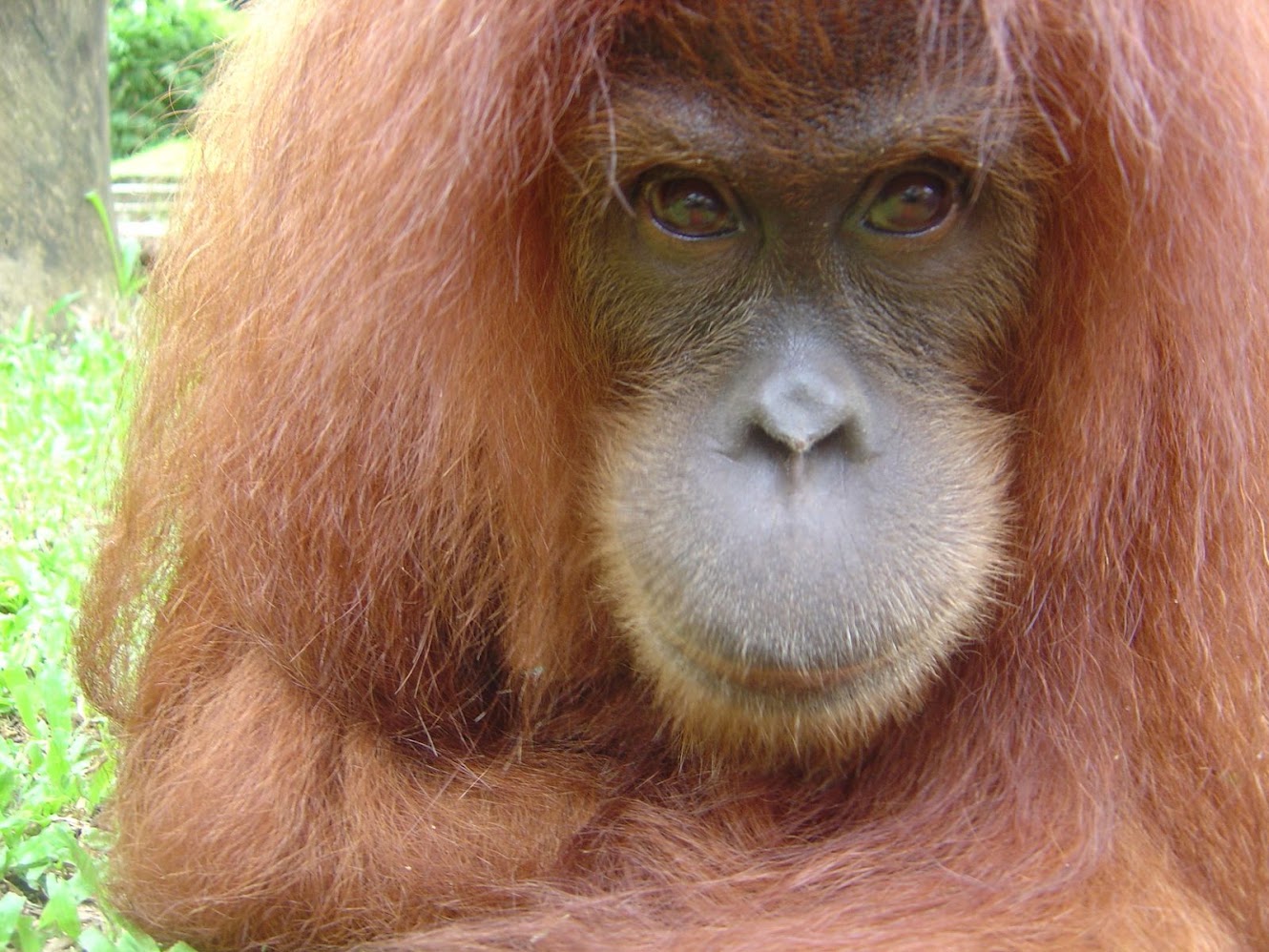
Sumatran orangutan- courtesy of OURF
A major new study has delivered a sobering assessment of the wild orangutans of northern Sumatra. Researchers estimate that approximately 11,694 Sumatran orangutans and just 716 Tapanuli orangutans remain across their respective ranges.
For the Sumatran orangutan, the findings represent an estimated 19.5 percent population decline compared with the previous range-wide assessment—equivalent to an average loss of roughly 1.8 percent each year.
The results were reported by environmental news organization Mongabay in its July 27, 2026 article, “Major orangutan study finds Sumatran population fell nearly 20% despite slower forest loss.”
The Most Comprehensive Survey in More Than a Decade
The peer-reviewed study, “Population status of Sumatran and Tapanuli orangutans: A comprehensive assessment 2021–2023,” was published in the journal Global Ecology and Conservation.
Researchers conducted 208 systematic nest-survey transects between 2021 and 2023 across the known ranges of both species in northern Sumatra. Their analysis identified:
- An estimated 11,694 Sumatran orangutans across eight metapopulations.
- An estimated 716 Tapanuli orangutans across three metapopulations.
- A combined population of approximately 12,410 orangutans.
- A 19.5 percent decline in the comparable Sumatran orangutan population since the earlier survey baseline.
- Approximately 2,204 orangutans—18 percent of the combined population—living outside formally protected areas.
The Tapanuli estimate represents the first systematic, range-wide population baseline for the species. With only about 716 individuals remaining, researchers warn that the Tapanuli orangutan has virtually no demographic cushion against further deaths.
Slower Forest Loss Has Not Stopped the Decline
One of the study’s most important conclusions is that the orangutan decline cannot be explained by deforestation alone.
Forest loss accounted for approximately 76 percent of the variation in population change among the surveyed metapopulations. However, some populations—particularly those in Batu Ardan and Siranggas—declined far more severely than changes in forest cover would predict.
This discrepancy points toward additional causes of mortality, including hunting, persecution during human-orangutan conflicts, capture for the illegal wildlife trade, and deaths associated with roads, plantations and increasingly fragmented landscapes.
The researchers cited government records documenting 15 orangutans in Aceh and North Sumatra between 2012 and 2024 with confirmed air-rifle pellet injuries. The pattern was considered consistent with deliberate shooting rather than accidental injury.
The unspoken lesson is stark: a forest can remain visible on a satellite image while gradually losing its orangutans. Forest-cover statistics alone therefore cannot tell us whether a population is safe.
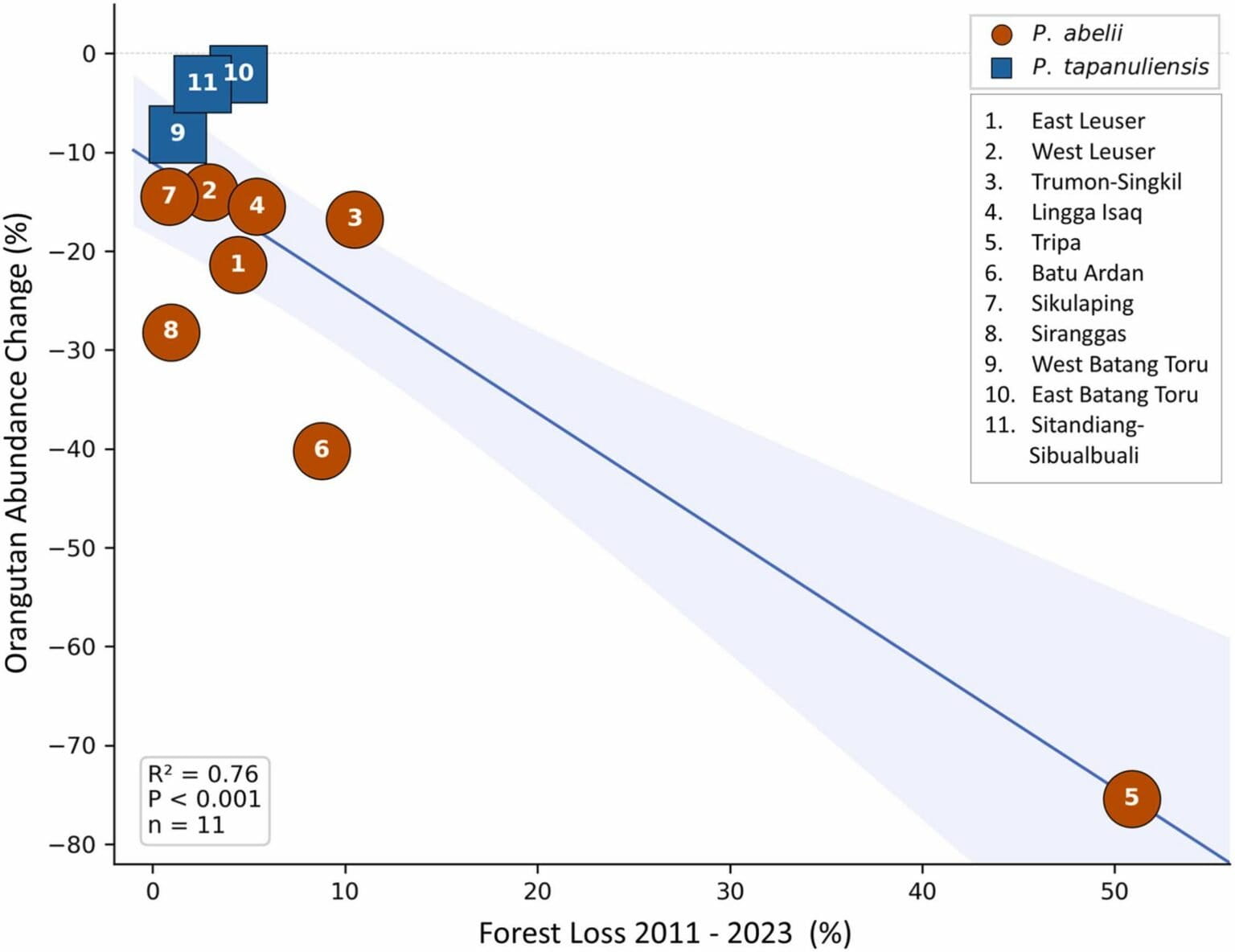
Relationship between proportional forest loss (2011–2023) and proportional population change across Sumatran and Tapanuli orangutan meta-populations, northern Sumatra. Forest loss explains 76% of variation in population change (R² = 0.76, P < 0.001). Numbers identify meta-populations. Meta-populations falling below the regression line (notably Batu Ardan and Siranggas) experienced declines exceeding those predicted by habitat loss alone, implicating additional non-habitat threats.
Protected on Paper Does Not Always Mean Protected on the Ground
The assessment found that approximately 82 percent of the remaining Sumatran and Tapanuli orangutans occur within formally protected areas. Yet populations continue to decline.
The researchers conclude that legal designation by itself is insufficient. Protection must be accompanied by effective enforcement, prevention of hunting and wildlife trafficking, restoration of habitat connections, and meaningful collaboration with communities living near orangutan habitat.
The situation is particularly urgent for the approximately 18 percent of orangutans living in landscapes without formal conservation status. These include the entire remaining Tripa population, whose peat-swamp habitat has faced decades of conversion, drainage, fire and fragmentation.
The highest orangutan densities recorded during the survey were found in the Trumon–Singkil peat-swamp forests, emphasizing the exceptional conservation importance of the remaining lowland peat ecosystems of Aceh.
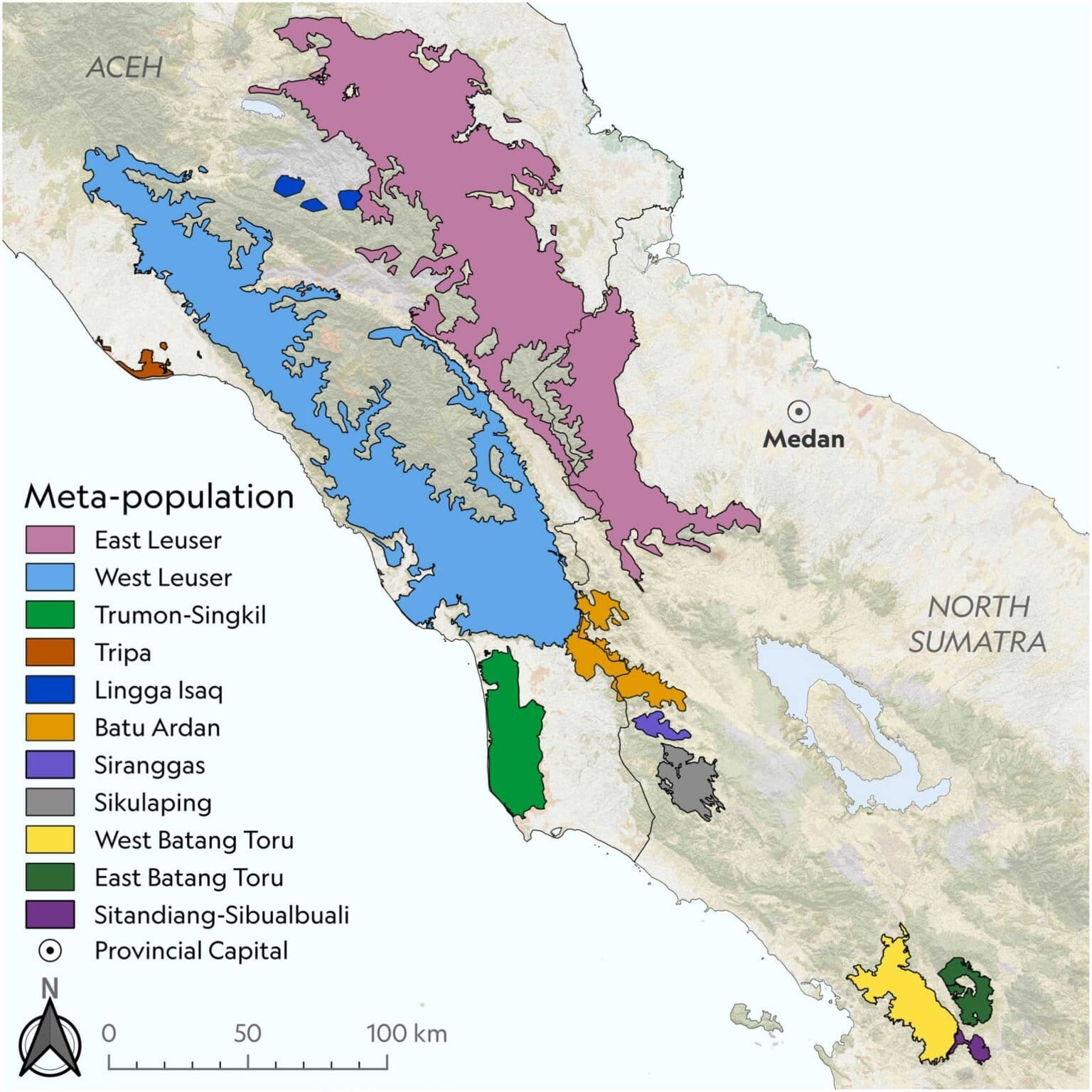
Meta-population boundaries for Sumatran and Tapanuli orangutans used in this study, northern Sumatra, Indonesia. Eleven meta-populations are delineated across the Leuser Ecosystem (East Leuser, West Leuser, Trumon-Singkil, Tripa, and Linga Isaq), BSS Forest Cluster (Batu Ardan, Siranggas, and Sikulaping), and Batang Toru Ecosystem (West Batang Toru, East Batang Toru, and Sitandiang-Sibualbuali). Map lines do not necessarily depict accepted national boundaries.
A Broad Indonesian and International Collaboration
The study brought together Indonesian government conservation personnel, Indonesian scientists and universities, and international orangutan researchers.
Among the institutions and conservation bodies represented or discussed in connection with the work are:
Indonesia’s Ministry of Forestry and regional conservation agencies
Government conservation authorities in Aceh and North Sumatra participated in population monitoring and maintain records of orangutan rescues, injuries and conflicts.
Universitas Indonesia
Researchers from Universitas Indonesia contributed to the scientific assessment and its analysis. The university’s research record lists the full multidisciplinary authorship and publication information for the study.
Liverpool John Moores University
The university’s research repository hosts the published study and its full population estimates, methodology and conservation conclusions.
Sumatran Orangutan Conservation Programme
The Sumatran Orangutan Conservation Programme, commonly known as SOCP, has conducted orangutan surveys, rescues, rehabilitation, habitat protection and long-term population monitoring across Sumatra. The program is implemented in Indonesia by Yayasan Ekosistem Lestari, in cooperation with the PanEco Foundation and Indonesian conservation authorities.
These partnerships demonstrate why orangutan conservation requires more than one organization or one intervention. Reliable population monitoring, law enforcement, habitat protection, community engagement, scientific research and long-term financing must work together.
What These Findings Mean for Conservation
The study does not suggest that forest protection has failed. On the contrary, the strong relationship between forest loss and orangutan decline confirms that preventing deforestation remains essential.
But the results also reveal a dangerous weakness in conservation strategies that measure success primarily in hectares.
Orangutan protection must include:
- Keeping remaining forests standing.
The Trumon–Singkil, Tripa and other surviving lowland forests contain some of the most important remaining orangutan habitat on Earth. - Connecting fragmented populations.
Isolated forest patches can leave orangutans genetically and demographically vulnerable even when individual patches remain forested. - Preventing direct killing.
Conflict mitigation, enforcement and community education are essential where orangutans enter farms, plantations or villages. - Supporting communities living beside orangutan habitat.
Families must have practical alternatives that allow them to protect crops and livelihoods without harming wildlife. - Monitoring orangutans, not simply forests.
Population surveys, field observations, conflict records and wildlife-crime investigations are necessary to determine whether conservation measures are actually keeping orangutans alive.
OURF’s Commitment
For the Orang Utan Republik Foundation, these findings reinforce the importance of investing in people as well as habitat.
Through conservation education, the Orangutan Caring Scholarship program, community initiatives and partnerships with Indonesian organizations, OURF works to develop the local knowledge, leadership and public support required for lasting orangutan protection.
A protected-area boundary cannot stop a bullet, reconnect an isolated population, resolve a crop conflict or inspire a young Indonesian to dedicate a career to conservation. Those outcomes depend on trained people, committed communities, functioning institutions and sustained partnerships.
The latest population estimates should therefore be understood not simply as another warning, but as a call to improve how conservation success is defined.
The ultimate measure is not how many hectares are classified as forest. It is whether orangutans—and the human communities sharing their landscapes—can continue to survive and flourish within them.
Sources and Further Reading
- Mongabay: Major orangutan study finds Sumatran population fell nearly 20% despite slower forest loss, published July 27, 2026.
- Hadi, A.N. et al. Population status of Sumatran and Tapanuli orangutans: A comprehensive assessment 2021–2023. Global Ecology and Conservation, Volume 69, 2026.
- Universitas Indonesia research publication record.
- Liverpool John Moores University Research Online.
- Sumatran Orangutan Conservation Programme, Yayasan Ekosistem Lestari and PanEco Foundation program background.
Our thanks to Mongabay for its reporting on this important study, for helping bring wider attention to the urgent conservation challenges facing Sumatran and Tapanuli orangutans, and for granting permission to use the accompanying graphics in this article.